
How to Start Exercising Again After 50 (Even If You've Been Off for Years)
- Bob Racer

- May 26
- 5 min read
It's never too late. Those four words might feel like a cliché — but when it comes to your fitness after 50, science backs them up completely.
Maybe it's been a few years since you laced up your sneakers with real intention. Maybe it's been a decade. Maybe you're not even sure where to start, or whether your body can still respond to exercise the way it once did. The good news? It absolutely can. And you don't need to do anything extreme to see real results.
Your Body Is More Ready Than You Think
Research consistently shows that adults who begin or return to regular exercise later in life experience significant cardiovascular, muscular, and metabolic improvements. A landmark study published in the Journal of the American College of Cardiology found that even moderate exercise started in midlife or beyond dramatically reduces the risk of heart disease and improves VO2 max — a key marker of cardiovascular fitness.
Your muscles still respond to resistance. Your heart still gets stronger with cardio. Your balance and coordination can improve with practice. The biology hasn't changed — and at 50, 60, or even 70+, your body still wants to adapt and grow stronger when you give it the right signals.
The only thing that truly gets in the way? Starting.
The Real Barriers — And How to Get Past Them
Let's be honest about what keeps most people stuck. It's rarely laziness. Usually, it's one of these:
Fear of injury. After years of inactivity — or after a past injury — it's natural to worry that exercise might hurt you. The key is starting gently, respecting your body, and building slowly. Done right, exercise protects your joints more than it harms them.
Embarrassment or self-consciousness. Whether it's stepping into a gym feeling out of shape, or just not wanting to be seen struggling, this is one of the most common (and least talked about) barriers. Here's the truth: working out at home removes that barrier completely — and plenty of effective training happens right in your living room.
Not knowing where to start. The fitness world is full of noise — HIIT, CrossFit, strength programs, cardio plans. When you've been away for a while, it's overwhelming. The answer? Ignore most of it. Start simple, start small, and build from there.
How to Ease Back In Safely
The single biggest mistake returning exercisers make is doing too much, too soon. Your enthusiasm is real — but your tendons, ligaments, and cardiovascular system need time to catch up to your motivation.
Here's how to start smart:
Week 1-2: Walk. That's it. A 20-30 minute brisk walk, 4-5 days a week, is a legitimate workout for a returning exerciser. It activates your cardiovascular system, loosens stiff joints, and — crucially — builds the habit of moving daily.
Week 3-4: Add low-impact movement. Bodyweight squats, gentle stretching, light resistance bands, or a short jump rope session are all excellent next steps. Keep sessions to 20-30 minutes. Soreness should be mild — not debilitating.
Month 2 and beyond: Gradually increase duration and intensity. Add a second form of exercise. Focus on consistency over intensity — four moderate sessions per week beats one brutal session you won't repeat.
Why Jump Rope Is One of the Best Re-Entry Tools After 50
Here's something most people don't realize: jump rope, done correctly and at low intensity, is actually a low-impact workout. The key is staying light on your feet and keeping the jumps small — just an inch or two off the ground. That's far less impact per step than jogging.
And the benefits for returning exercisers are hard to beat:
Short sessions count. Even 10 minutes of jump rope delivers meaningful cardiovascular and coordination benefits. You don't need an hour. You need consistency.
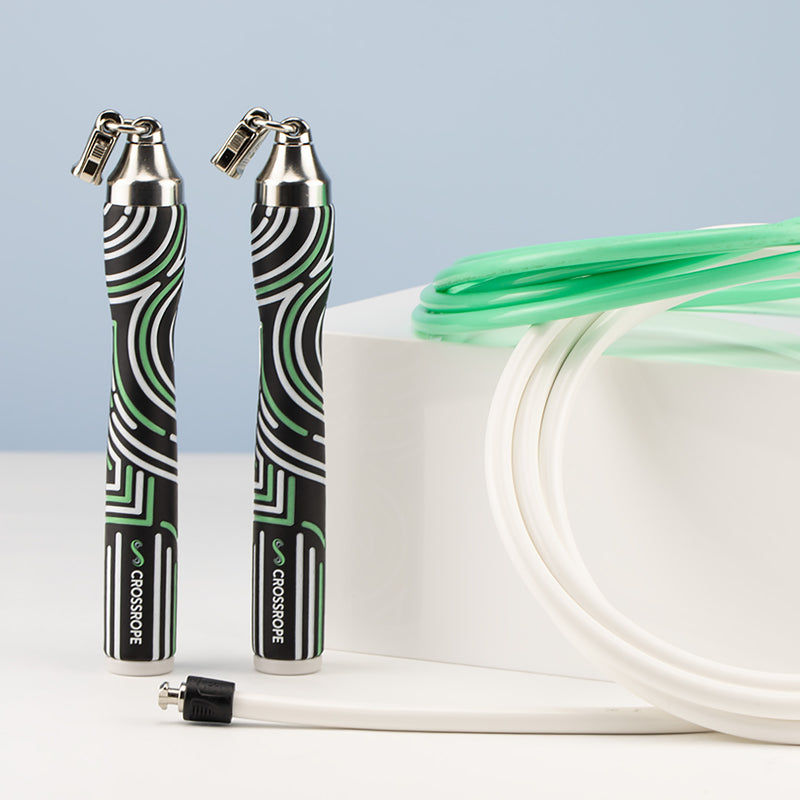
Adjustable difficulty. With Crossrope weighted jump ropes, you can start with a lighter rope for low intensity — and as you get fitter, simply swap to a heavier rope to increase the challenge. No new equipment, no new gym membership. One tool that scales with you.
Home-friendly. No commute, no crowds, no judgment. You can jump rope in your living room, garage, or backyard. It takes up almost no space and costs a fraction of a treadmill.
Bone density and balance. Jumping is a weight-bearing exercise — exactly what adults over 50 need to maintain bone density and improve balance and coordination. These are areas where inactivity causes real, measurable decline.
If you're curious whether Crossrope is right for you, I did a full hands-on review specifically for adults over 50 — check it out here: Crossrope Review for Adults Over 50. Use code ARP15 for a discount.
Your Simple 4-Week Starter Plan
Here's a realistic, low-pressure plan to get you moving again — no gym required:
Week 1 — Build the habit: Walk 25 minutes, 4 days. Focus on showing up, not on pace or distance. Rest the other 3 days.
Week 2 — Add some movement: Walk 25 minutes, 3 days. Add 2 days of light bodyweight work: 10 squats, 10 wall push-ups, 10 standing hip hinges. Rest 2 days.
Week 3 — Introduce the rope: Walk 20 minutes, 2 days. Bodyweight circuit, 2 days. Try 2 short jump rope sessions: 5-8 minutes, focusing on relaxed, light jumps. Rest 1 day.
Week 4 — Build confidence: Walk 20 minutes, 2 days. Bodyweight circuit, 2 days. Jump rope 10 minutes, 2 days. Notice how much better you feel compared to Day 1.
That's it. Nothing extreme. Nothing you can't do. And by the end of week 4, you've built a foundation that most people never get around to starting.
Listen to Your Body — It's Not the Enemy
At 50+, recovery takes a little longer than it did at 25. That's not a weakness — it's just biology. Respecting it is what keeps you training consistently for years instead of burning out in weeks.
Some soreness after exercise is normal, especially when returning after a break. Mild muscle ache that fades within 48 hours? That's your body adapting. Sharp pain in joints, pain that worsens with activity, or anything that doesn't resolve — stop and check in with your doctor or physio.
Two rest days a week are non-negotiable, especially in the first month. Sleep, hydration, and protein intake matter more than ever at this stage. These aren't excuses to do less — they're the ingredients that make your effort actually stick.
The Compounding Effect: Small Steps, Big Results
Here's what nobody tells you when you're standing at the beginning feeling behind: the people who see the most dramatic transformations are almost always the ones who started from zero.
When you're deconditioned, your body responds to even small amounts of exercise very quickly. The first few months bring the steepest gains in cardiovascular fitness, strength, and energy levels. Every session compounds on the last.
Three months from now, if you simply follow the plan above and keep moving forward at a moderate pace, you will feel noticeably different. More energy. Stronger. Better sleep. Improved mood. That's not optimism — that's what the research shows, over and over.
The only way to miss out on those results is to wait for the perfect moment to start. There isn't one. Today is perfect enough.
Your Takeaways
Starting exercise after 50 — even after years away — delivers real, measurable results. Science is on your side.
The biggest barriers are psychological, not physical. Start at home, start small, and remove friction.
Walk first. Build the habit before you build the intensity.
Jump rope — especially Crossrope weighted ropes — is one of the most efficient, low-barrier, home-friendly tools for adults over 50 returning to fitness. Even 10 minutes counts.
Consistency beats intensity every time. Show up regularly, rest properly, and let the compounding effect do its work.
Ready to take the next step? Book your free consultation at over50fitlife.com and let's build a plan that actually works for your body.
This post contains affiliate links. If you purchase through my links, I may earn a small commission at no extra cost to you.


Comments