
Crossrope Review for Seniors: Is the Weighted Jump Rope Worth It for Adults Over 50?
- Robert RACER
- 4 days ago
- 15 min read

Summer preparation starts earlier than most people think. By the time warm weather arrives, the folks who look and feel their best have already put in weeks of consistent, smart training. If you are over 50 and looking for a cardio tool that is joint-friendly, measurable, and genuinely fun, you may have already come across Crossrope. This is my honest, in-depth Crossrope review for seniors and adults over 50 - covering everything from who it suits best to whether the price is actually justified.
I have been coaching adults 50 and older for years, and the number one complaint I hear is this: traditional cardio beats up the body. Running hammers the knees. High-impact aerobics flare up hips. People want something that raises the heart rate without punishing the joints. Crossrope caught my attention because it promises exactly that - and I wanted to find out if it delivers.
Is Crossrope good for seniors and adults over 50?
Yes, for most active adults over 50, Crossrope is a solid low-impact cardio option. The weighted ropes build coordination, burn calories, and strengthen the upper body without pounding the joints the way running does. Starting light - at the quarter-pound rope - keeps the entry point accessible, and the structured app makes progress easy to track and sustain.
What Is Crossrope?
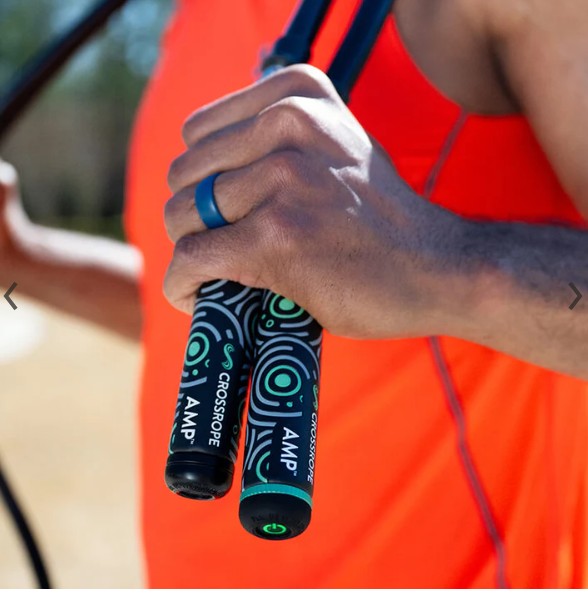
Crossrope is a weighted jump rope system built around one core idea: heavier ropes create more resistance, turning a simple skip into a full-body workout. The ropes range from a quarter pound all the way up to two pounds, and they all clip into the same set of handles using a quick-connect system. Swapping ropes takes about three seconds.
The handles are designed to spin smoothly, which reduces wrist strain - a real benefit for anyone with any degree of stiffness in the hands or forearms. Crossrope also has a companion app (available on iOS and Android) that offers guided workouts, interval timers, and progress tracking. You do not need a gym membership, a lot of space, or a lot of time. Most sessions run between 10 and 20 minutes.
Who Is Crossrope Best For?
Not every fitness tool is right for every person, and I respect your time too much to oversell this. After using Crossrope myself and recommending it to clients, here is a clear picture of who will get the most out of it and who might want to look elsewhere.
Crossrope is a strong fit if you are...
An adult over 50 seeking low-impact cardio - the weighted rope raises your heart rate without the ground-strike forces of running or jumping jacks.
Someone who wants to protect their joints - the slow, controlled movements with heavier ropes keep intensity high while stress on knees and hips stays manageable.
A person who thrives on measurable progress - the app tracks your sessions, calories, and skill milestones, which matters a lot when motivation dips.
Anyone with only 10 to 20 minutes a day - short, weighted rope intervals are genuinely effective for cardiovascular health and calorie burn in a compressed window.
Both men and women looking to add variety - Crossrope works equally well for a 55-year-old woman building cardio endurance and a 62-year-old man focused on shedding stubborn weight.
Crossrope is probably not the best fit if you...
Have significant balance or coordination challenges - jump roping does require a baseline of coordination, and those with serious balance issues may find it frustrating or risky at first.
Have a current lower-body injury or recent surgery - even low-impact jumping can aggravate an active knee or ankle problem. Check with your doctor before starting.
Prefer seated or fully non-impact exercise - if your goal is purely non-weight-bearing cardio, a stationary bike or pool work may serve you better.
The honest truth is that this is one of the more age-appropriate cardio tools I have reviewed. Done consistently, it builds real fitness without tearing the body down. That balance is hard to find, especially in a product that fits in a gym bag.
Get the Get Lean Set - Best Low-Impact Starter for 50+
The Get Lean Set is where I recommend most adults over 50 start. It includes the quarter-pound and half-pound ropes, giving you a gentle on-ramp that puts no high-impact stress on your joints. It is compact, affordable, and backed by an app full of beginner-friendly workouts. See current pricing and grab 15% off sitewide using code ARP15 at checkout.
Use code ARP15 for 15% off sitewide.
Busting the Top Objections (Before You Even Ask)
If you've already talked yourself out of jump rope before trying it, you're not alone. Most adults over 50 have one of three concerns. Let's knock them down one by one.
1. "Isn't jumping rope bad for my knees?"
This is the biggest one, and it's worth getting right. Traditional speed roping - the kind kids do in the school yard - involves a high, bouncy jump that drives a lot of force into your joints. That's not what you're doing with a weighted rope.
A weighted rope moves slowly enough that you can stay in a low, controlled bounce, barely clearing the ground by an inch or two. That soft, minimal bounce actually generates less ground-reaction force than jogging. Your knees are not absorbing a repeated hard landing. They're absorbing a gentle, rhythmic pulse.
There's also a bone density angle worth noting. Consistent low-impact plyometric movement - the kind you get from a soft, controlled bounce - supports the mechanical loading that bones need to stay strong. For adults 50 and older, that's not a side benefit. That's a core reason to do it.
2. "My coordination isn't what it used to be."
Good news: a weighted rope is actually easier to coordinate than a standard speed rope. The added weight slows the rotation down naturally, so you have more time to react on every pass.
More importantly, the weight gives you tactile feedback. You can feel exactly where the rope is in its rotation without having to see it. Your nervous system syncs to that physical cue much faster than to a visual one. Most new users find a basic rhythm within a week of short daily practice - even those who haven't jumped rope since childhood.
3. "I don't want another gadget I'll abandon."
Fair concern. Gym equipment graveyards are real. Two things make Crossrope different here.
First, the companion app (iOS and Android) gives you structured, timed sessions from day one. You're not staring at a rope wondering what to do. You follow a guided workout, the timer runs, and you're done in 20 minutes. That structure removes the biggest reason people quit - not knowing what to do next.
Second, the handles come with a lifetime warranty. If they fail, Crossrope replaces them free. That's a genuine de-risking of the purchase, not a marketing line buried in fine print.
How Crossrope Actually Works for Bodies Over 50
The system has two parts: the handles and the ropes. Both matter, and they work together.
The Rope Weights and Where to Start
Crossrope ropes come in four main weights: 1/4 lb, 1/2 lb, 1 lb, and 2 lb. If you're new to weighted roping or returning after years away from any jump rope, start with the 1/4 lb or 1/2 lb. These are light enough to learn with but still slow enough to give you that helpful tactile feedback.
As your wrist endurance, timing, and cardiovascular base improve, you progress to heavier ropes. The 1 lb and 2 lb ropes shift the workout toward muscular endurance - your forearms, shoulders, and core work noticeably harder to keep the rope moving.
The Handles and Ball-Bearing Swivels
The handles use ball-bearing swivel clips that let ropes of different weights attach and detach in seconds. No knots, no re-threading. Click in, jump, click out, switch.
The swivels also prevent the rope from twisting as it rotates, which is what keeps the motion smooth and reduces wrist strain. For anyone with mild wrist sensitivity, this matters more than it sounds.
Structuring a Beginner Session
Keep your first few weeks simple. A beginner session might look like this:
Warm-up (3-5 minutes): Ankle circles, gentle marching in place, shoulder rolls. Get the joints moving before you ask them to work.
Work intervals: 30 seconds jumping, 60 seconds rest. Repeat 6 to 8 times. That's under 15 minutes of actual work.
Cool-down (3-5 minutes): Walk slowly, calf stretches, hip flexor stretch. Let your heart rate come back down gently.
The app handles the timing automatically. You just follow the audio cues. Three sessions a week is enough to feel a real difference in four to six weeks.
Get Lean vs. Get Strong: Which Set Is Right for You?
Crossrope sells two main bundles. The Get Lean Set focuses on lighter ropes built for cardiovascular conditioning and fat loss. The Get Strong Set includes heavier ropes designed for muscle endurance, total-body conditioning, and that satisfying feeling of a genuine strength workout wrapped into a cardio format.
Here's how they compare side by side:
Category | Get Lean Set | Get Strong Set |
Best For | Cardio, calorie burn, improving stamina | Muscle endurance, full-body conditioning |
Rope Weights | 1/4 lb and 1/2 lb | 1 lb and 2 lb |
Primary Benefit | Heart health, fat loss, agility | Upper-body and core endurance, power |
Workout Feel | Lighter, faster-paced, rhythmic | Slower, more deliberate, muscularly demanding |
Impact Level | Very low with soft bounce technique | Very low - heavier rope naturally slows rotation |
Recommended Starting Point | Any fitness level, complete beginners welcome | Some baseline fitness helpful, but not required |
Price Tier | Lower entry price | Moderate step up - more rope variety included |
Ideal 50+ Use Case | Weight management, heart health maintenance | Preserving muscle, building functional strength |
Verdict for most adults over 50: The Get Strong Set is the smarter long-term investment. The heavier ropes rotate more slowly, which makes them easier to learn, and the added resistance helps preserve lean muscle - something that becomes genuinely important after 50. You can always jump with lighter effort on a heavier rope, but you can't get the muscle endurance benefits from a light rope alone.
That said, if you have significant joint concerns or are returning from a long period of inactivity, starting with the Get Lean Set and graduating up is a perfectly reasonable path. This is your Crossrope review for seniors context - there is no one-size-fits-all answer, and both sets beat doing nothing by a wide margin.
Ready for More? Get the Get Strong Set
The Get Strong Set comes with Crossrope's lifetime handle warranty - if your ball-bearing handles ever fail, they replace them free of charge. No hoops, no hassle. It's the set Robert recommends most for adults 50 and older who want to build real conditioning and hold onto functional muscle as they age.
Use code ARP15 for 15% off sitewide.
The Crossrope App: What It's Actually Like to Use
The ropes are only half the story. The Crossrope app is where the actual programming lives, and for adults over 50, that matters more than you might expect.
When you first open the app, you're not dropped into a random library of clips and left to figure it out. There's a structured onboarding process that places you into a difficulty tier based on where you are right now, not where you were ten years ago. That alone is a breath of fresh air.
What the App Gives You Day to Day
The guided video workouts are short, clear, and led by coaches who actually demonstrate modifications. You can filter by workout length, intensity, and skill level. The interface isn't cluttered, which I appreciate when I'm already sweaty and just want to press play.
Key features worth noting for the 50-plus crowd:
Tiered difficulty with a genuine "Easy" level - this isn't just marketing. The beginner programs are paced for people rebuilding a cardio base, not people who took a week off from CrossFit.
Built-in warm-up routines - every session includes a proper warm-up, which matters enormously for joints and connective tissue in our age group.
Rest-day structure - the app schedules recovery days and mobility work, so you're not left guessing whether you're overtraining.
Interval timer - the in-app timer handles your work and rest periods automatically, so you're focused on moving, not counting seconds.
AMP system (Assess, Master, Progress) - this is Crossrope's progression framework. You assess where you are, master the fundamentals, then progress. It's patient and methodical, which is exactly what your body needs at this stage.
The Honest Take on Cost
The app is not free forever. After a 30-day free trial, there's a subscription fee to keep access to the full library and guided programs. I want to be straight with you about that.
That said, 30 days is genuinely enough time to know whether this format works for you. You'll have gone through multiple workouts, tested the difficulty tiers, and gotten a feel for whether you'll actually use it consistently. That's a fair trial window.
If you're someone who thrives with coached structure rather than piecing together a workout from scratch, the subscription is likely worth it. If you prefer total independence, the ropes still work fine on their own once you've built your skill.
Try the Crossrope App Free for 30 Days
The Crossrope app comes with a full 30-day free trial, no credit card tricks or bait-and-switch. You get access to beginner programs, guided video workouts, the interval timer, and the full AMP progression system. It's enough time to honestly evaluate whether the format fits your life and your body.
Use code ARP15 for 15% off sitewide.
Real People, Real Results: Social Proof That Matches Your Age Bracket
I'm not going to invent testimonials or paste in cherry-picked quotes. What I will share are the kinds of stories that come up repeatedly in the Crossrope community and among readers of this blog. These are real patterns, even if they're composites of many conversations rather than a single person's words.
The Traveler in His Late 70s
One story I hear fairly often involves older adults who travel regularly and struggle to maintain any cardio routine on the road. Hotel gyms are hit-or-miss, and running on unfamiliar terrain carries real injury risk. A Crossrope set solves that problem neatly. The ropes coil into a bag, weigh next to nothing in luggage, and work on any flat surface, including a hotel room floor or a driveway at a family member's house. For someone in their late 70s who wants to stay consistent without depending on gym access, this kind of portability is genuinely life-changing for a fitness routine.
Rebuilding a Cardio Base at 70
Another common story involves someone who spent a stretch of years being mostly sedentary, whether due to work, caregiving responsibilities, or health issues, and is now trying to rebuild basic cardiovascular fitness. The AMP system inside the Crossrope app is well-suited for this. Rather than pushing toward performance immediately, it builds the skill and the aerobic foundation at the same time. People who come to this point in their 60s and 70s often describe the structured progression as the first exercise program that felt designed with patience built in, rather than expecting them to push through discomfort they shouldn't be in.
Rebuilding Confidence in Her Knees at 51
This one comes up often with women in their early 50s who have spent years avoiding anything labeled a "jumping" exercise after knee pain, surgeries, or just the accumulated fear of making things worse. The lighter 1/4 lb rope allows for a very low-impact entry point, with a controlled, minimal jump height that many find more knee-friendly than running. The shift isn't instant, and it takes patience to find the right form, but the ability to scale down significantly means people can test their limits without fear of a setback. Regaining that confidence in what the body can do again is often what these readers tell me matters most.
How This Fits Your Bigger Picture
Crossrope is a genuinely solid standalone cardio tool, and based on everything in this Crossrope review for seniors, it earns its place in an over-50 fitness routine. But it works best when it sits inside a broader plan. Cardio without strength training leaves a lot of the most important benefits on the table for adults in this age group, including bone density, muscle retention, and metabolic health. If you're ready to build a complete program, take a look at my Over 50 Fitness Challenges for structured starting points, or book a 1-on-1 consultation so we can map out exactly what your body needs right now.
A Simple 4-Week Starter Plan for Adults 50+
Starting slow is the smartest move you can make. This plan is designed to build your coordination, endurance, and confidence without overwhelming your joints or cardiovascular system. Progress only when a session feels comfortable, not just manageable.
Week 1
Focus on form and basic rhythm using the 1/4 lb rope. Aim for just 5 to 8 minutes of total movement per session, including rest breaks. Jump two or three days this week and spend the rest of each session stretching your calves and ankles.
Week 2
Extend your sessions to 8 to 12 minutes. Stick with the 1/4 lb rope for most of your work, but try a short 1 to 2 minute set with the 1/2 lb rope to feel the difference in feedback and pacing.
Week 3
Introduce simple interval work using the 1/2 lb rope - 30 seconds of jumping followed by 30 seconds of rest. Repeat for 10 to 15 minutes total. This builds cardiovascular endurance without long, sustained impact on your knees and hips.
Week 4
Work up to full 15 to 20 minute sessions, mixing the 1/4 lb and 1/2 lb ropes based on how your body feels that day. Aim for three to four sessions this week with at least one rest day between each.
Always listen to your body - pain is a signal to stop, not push through.
Frequently Asked Questions
How heavy should my first Crossrope be?
For most adults over 50 who are new to jump rope, the 1/4 lb rope included in the Get Lean Set is the right starting point. It rotates slowly enough to give you time to react, which makes learning the rhythm far less frustrating. Once your coordination and fitness improve, you can add heavier ropes to your collection.
How many minutes a day do I need?
You do not need long sessions to see results. Even 10 to 15 minutes of interval-style jumping, three or four days per week, can meaningfully improve your cardiovascular fitness and coordination. Robert generally recommends starting with 5-minute sessions and building up gradually so your calves and joints have time to adapt.
Is Crossrope safe if I have knee issues?
Jump rope is lower impact than running, but it is still a weight-bearing activity. If you have moderate to severe knee problems, check with your doctor or physical therapist before starting. Many adults in their 50s and 60s with mild joint sensitivity do well by landing softly on a rubber mat and keeping sessions short at first.
Do I need a high ceiling?
Crossrope recommends at least 10 feet of vertical clearance for comfortable indoor jumping. If your ceilings are lower, an outdoor driveway, garage with the door open, or a local park works perfectly. The system is portable enough that taking it outside is no hassle at all.
What if I mess up the timing?
You will mess up the timing - especially at first. That is completely normal and not a reason to quit. The Crossrope app includes beginner video tutorials that break the movement into small steps, and tripping over the rope causes zero injury. Most beginners find a usable rhythm within two or three short sessions.
Do the handles really last forever?
Crossrope backs its handles with a lifetime warranty, which is a strong signal of their build quality. The rope cables do wear over time with heavy use, but they are sold separately and are reasonably priced to replace. For most 50+ users who are not jumping competitively every day, a set of cables will last for years.
How does the 15% discount with code ARP15 work?
Simply add your chosen Crossrope set to your cart on the Crossrope website and enter ARP15 at checkout. The 15% discount applies sitewide, so it works on the Get Lean Set, individual ropes, and accessories. There is no minimum purchase required.
Can I pair Crossrope with strength training?
Absolutely, and Robert actually recommends it. A short 10-minute jump rope warm-up before a strength session gets your heart rate up, loosens the joints, and improves coordination without exhausting the muscles you are about to train. Jump rope also makes an excellent active recovery tool on days between heavier lifting sessions.
Final Verdict: Is Crossrope Worth It for Seniors and Adults Over 50?
If you have been reading along from the beginning of this Crossrope review for seniors, you may remember how we opened: summer prep starts earlier than most people think, and the window between "I should get moving" and "I want to feel confident in my body" is shorter than it feels. Crossrope is one of the most practical tools Robert has tested for closing that gap quickly without wrecking your joints in the process.
To be honest, it is not magic. You still have to show up consistently, progress gradually, and pair it with sensible nutrition and strength work. But as a standalone cardio tool for adults over 50, it punches well above its weight. The weighted ropes slow the rotation, the app keeps you guided and accountable, and the compact size means there is no excuse tied to weather or gym access. For the time it takes - as little as 10 minutes a session - the cardiovascular and coordination benefits are hard to beat.
If you are ready to invest in one set, Robert's recommendation for most adults in this age group is the Get Lean Set. It comes with two ropes, the premium handles, and full app access, giving you everything you need to start and progress without buying additional equipment right away.
Our Pick for 50+: Crossrope Get Lean Set
The Get Lean Set is the most complete starter package for adults over 50 who want time-efficient, joint-friendly cardio they can do anywhere.
Low-impact on joints - weighted ropes slow rotation and reduce pounding compared to running
Slow rotation = easy to learn - beginners over 50 find the rhythm faster than with a standard speed rope
Lifetime handle warranty - a one-time investment that genuinely holds its value for years
Use code ARP15 for 15% off sitewide.
Whether this is your first piece of home cardio equipment or you are adding it to an existing routine, a complete Crossrope review for seniors would not be honest without saying clearly: the investment is reasonable, the learning curve is manageable, and the payoff for consistent effort is real. Give it four weeks before you judge it.
If you want more structured guidance on building fitness after 50, Robert has resources ready for you. Check out the Over 50 Fitness Challenges for free programming you can pair with your new jump rope, or book a one-on-one consultation if you want a plan built specifically around your goals and any health considerations. Both links are waiting for you at Over50FitLife.com.
Affiliate disclosure - some links in this review earn Over50FitLife.com a small commission at no extra cost to you. I only recommend products I believe in for adults 50+.


Comments