
Best Low-Impact Cardio for Adults Over 50 (That Actually Burns Fat)
- Bob Racer

- May 5
- 5 min read
If someone told you that you need to run sprints or do high-intensity boot camp classes to burn fat after 50, they were wrong — and possibly setting you up for injury.
The good news? Low-impact cardio isn't just a consolation prize for aging joints. Done right, it's one of the most effective fat-burning strategies available to adults over 50. The key is knowing which options actually deliver results — and which ones you'll stick with long enough to see them.
Why Low-Impact Cardio Is Smarter After 50
Your body at 50+ is not the same as it was at 30. That's not a bad thing — it just means your approach to cardio needs to be smarter, not harder.
After 50, joints tend to have less cartilage cushioning, hormonal shifts (especially in estrogen and testosterone) slow your metabolism, and recovery takes longer. High-impact exercises like running or jumping jacks can compound these issues, leading to knee pain, shin splints, or stress fractures.
Low-impact cardio solves this by keeping at least one foot on the ground (or keeping you supported) at all times — dramatically reducing joint stress while still elevating your heart rate into the fat-burning zone. Research consistently shows that adults who engage in regular low-impact cardio maintain healthier body composition, better cardiovascular function, and improved mood well into their 70s and 80s.
1. Walking: The Underrated Fat-Burner
Don't underestimate walking. A brisk 30-45 minute walk keeps your heart rate in the aerobic fat-burning zone — typically 50-70% of your max heart rate — and is one of the most sustainable habits you can build.
To increase the calorie burn, try:
• Adding incline (treadmill or hills) • Carrying light hand weights or wearing a weighted vest • Incorporating intervals — walk briskly for 2 minutes, then at a comfortable pace for 1 minute • Aiming for 7,000-10,000 steps per day as a baseline goal
Walking is also exceptional for cortisol management. High cortisol — a stress hormone that increases with age — actively promotes belly fat storage. A daily walk is one of the few exercises that lowers cortisol while burning calories.
2. Swimming: Zero-Gravity Fat Burning
Swimming is the gold standard for joint-friendly cardio. The buoyancy of water eliminates nearly all impact on your knees, hips, and spine — making it ideal if you're managing arthritis, back pain, or recovering from an injury.
A moderate-intensity swim session burns 400-600 calories per hour and works virtually every muscle group. The resistance of the water also builds muscular endurance, which helps preserve lean muscle mass — a critical factor in keeping your metabolism active after 50.
If lap swimming feels too repetitive, look into water aerobics classes. They're social, effective, and easy on the body.
3. Cycling: High Output, Low Joint Stress
Whether you prefer an outdoor bike, a stationary bike, or a spin class, cycling delivers excellent cardiovascular and fat-burning benefits with minimal joint impact.
Cycling is particularly effective for adults over 50 because you can control the resistance precisely — making it easy to dial in your effort level. You can do a steady, moderate-intensity ride to stay in the fat-burning zone, or add interval bursts to boost your metabolic rate after the workout.
Stationary bikes with back support (recumbent bikes) are a great option if you have lower back issues. Many gyms have them, and they're widely available for home use.
4. Elliptical: Full-Body Cardio Without the Pounding
The elliptical trainer is one of the best-kept secrets in low-impact cardio. It mimics the motion of running — engaging your legs, glutes, and core — without the ground-impact that makes running so hard on aging joints.
Most modern ellipticals include moving handlebars, turning the workout into a full-body calorie burner. At moderate intensity, you can torch 450-600 calories per hour. Crank up the resistance and you'll also build muscular endurance in your legs and glutes, which supports fat burning even at rest.
If you've been avoiding the gym because running feels impossible on your knees, the elliptical might be exactly what you've been looking for.
5. Weighted Jump Rope: The Surprising Low-Impact Powerhouse
Here's where things get interesting. Jump rope has a reputation as high-impact — but that reputation is mostly about traditional speed ropes done incorrectly. Weighted jump ropes, used with proper technique, are a different story.
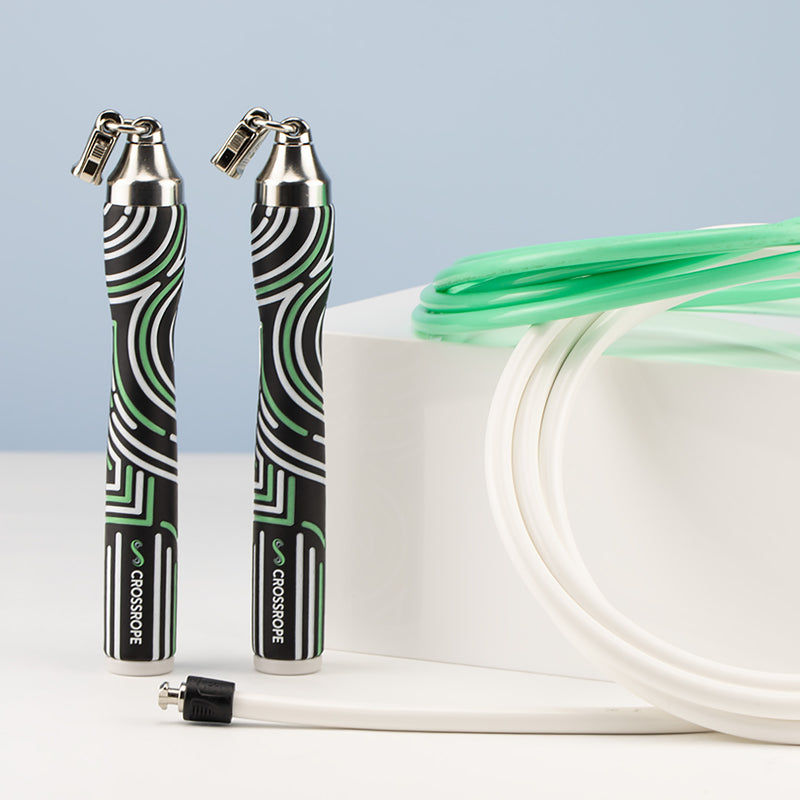
Weighted ropes — particularly the ones made by Crossrope — slow down the rope's rotation, which naturally encourages a lower, more controlled jump. Instead of pounding the ground with every rep, you're barely leaving the surface. The impact is closer to walking than running, while the calorie burn is significantly higher.
The metabolic benefits are exceptional. A 10-minute session with a weighted jump rope can burn as many calories as a 30-minute jog — without the joint stress. The rope also engages your arms, shoulders, and core in ways that most traditional cardio can't match, making it a true full-body workout.
I've tested and reviewed Crossrope specifically for adults over 50, and the results genuinely impressed me. You can read my full breakdown here: Crossrope Review for Adults Over 50 – Is the Weighted Jump Rope Actually Worth It? (https://www.over50fitlife.com/post/crossrope-review-for-adults-over-50-is-the-weighted-jump-rope-actually-worth-it)
If you want to try it, use code ARP15 at checkout for 15% off your Crossrope order.
6. Rowing: The Full-Body Cardio Most People Skip
Rowing machines are underused — and that's a shame, because they're phenomenal for adults over 50. Rowing is fully seated, eliminating lower-body joint impact entirely, while engaging your legs, back, core, and arms in a coordinated motion.
The cardiovascular load is high (up to 600+ calories per hour), but because the effort is spread across so many muscle groups, it rarely feels as punishing as other forms of intense cardio. It's also exceptional for posture — a common concern as we age — because it actively strengthens the muscles of your upper back and shoulders.
How to Build Your Weekly Low-Impact Cardio Schedule
Consistency beats intensity every single time after 50. Here's a realistic sample week to get you started:
Monday: 30-minute brisk walk (or weighted jump rope, 10-15 minutes) Tuesday: Rest or gentle stretching Wednesday: 30-40 minutes on the elliptical or cycling Thursday: 20-30 minutes of swimming or water aerobics Friday: Weighted jump rope intervals (10-12 minutes) + 15-minute walk Saturday: 45-60 minute bike ride (outdoor or stationary) Sunday: Rest or light walking
This schedule gives you 5 active days with two rest days built in — which is crucial for recovery at this stage of life. As your fitness improves, you can extend session lengths or add light strength training on two of those active days.
Getting Started: What to Expect in the First 4 Weeks
The first two weeks will feel harder than they should. That's normal. Your cardiovascular system, muscles, and joints are all adapting to new demands. Don't let the initial discomfort fool you into thinking it's not working.
By weeks three and four, most people start to notice:
• Better energy throughout the day • Improved sleep quality • Reduced stiffness in the morning • Clothes fitting differently (even before the scale moves) • Improved mood and less anxiety
The scale is the last thing to change — and often the least important indicator of whether your cardio routine is working. Focus on how you feel and how you move. The fat loss follows.
Key Takeaways
• Low-impact cardio is not a lesser version of cardio — it's the smart version for adults over 50. • Walking, swimming, cycling, elliptical, weighted jump rope, and rowing are all excellent choices. • Weighted jump ropes (especially Crossrope — use code ARP15 for 15% off) offer maximum calorie burn with surprisingly low joint impact. • Aim for 5 days of cardio per week, starting with 20-30 minutes per session. • Consistency over months matters far more than intensity in any single session. • Pair your cardio with strength training 2-3 times per week for maximum metabolic benefit.
Ready to take the next step? Book your free consultation at over50fitlife.com and let's build a plan that actually works for your body.
This post contains affiliate links. If you purchase through my links, I may earn a small commission at no extra cost to you.


Comments