
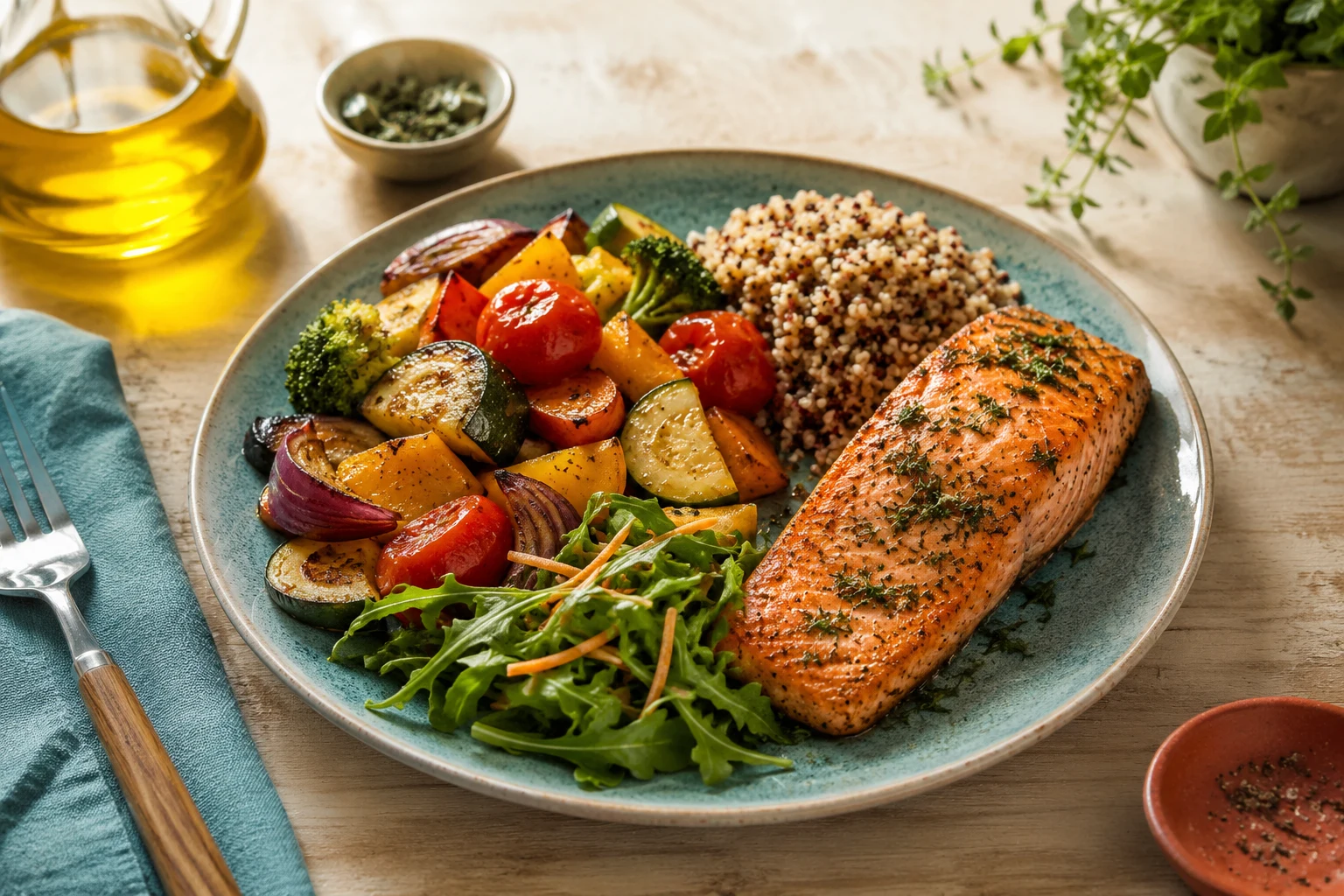
Protein deserves attention after 50 because muscle supports strength, balance, recovery, blood-sugar management, and independence. But “eat more protein” is incomplete advice.
The amount that helps one person may be inappropriate for another—especially when kidney disease, diabetes, liver disease, medication use, appetite changes, or another medical condition is involved.
The goal is not maximum protein. It is the right amount, distributed in a practical way, for your body and health plan.
Why Protein Becomes More Important After 50
As we age, muscle can become less responsive to the same meal and exercise signals that worked earlier in life. This is often called anabolic resistance. Resistance training remains the most important signal to maintain or build muscle, while dietary protein supplies the amino acids used for repair.
That is why our approach combines protein awareness with progressive, joint-conscious strength work. Food and training work together; neither one replaces the other.
A Practical Daily Range—Not a Prescription
Research groups commonly discuss approximately 1.0–1.2 grams of protein per kilogram of body weight per day for many healthy older adults. Some active adults or people recovering from illness may be advised to consume more, sometimes in the 1.2–1.6 g/kg/day range.
Those figures are population-level guidance, not personal prescriptions. Body size, training, calorie intake, appetite, digestion, kidney function, and medical care all affect the appropriate target.
For perspective, a 170-pound person weighs about 77 kilograms. A range of 1.0–1.2 g/kg would equal roughly 77–92 grams per day. That example is math—not a recommendation for every 170-pound adult.
How Much Protein Per Meal?
Many adults find it helpful to distribute protein across breakfast, lunch, and dinner instead of saving most of it for the evening. Depending on body size and the rest of the day, a meal containing roughly 25–40 grams can be a useful planning range for a healthy adult.
The lower end may be plenty for a smaller person. A larger or highly active person may need more. You do not have to hit the exact same number at every meal.
What 25–35 Grams Can Look Like
- Greek yogurt plus milk, nuts, or seeds
- Eggs paired with cottage cheese or yogurt
- A palm-sized portion of chicken, turkey, fish, tofu, or tempeh
- Beans or lentils combined with another protein-rich food
- A medically appropriate protein shake when food alone is difficult
Check labels and portions rather than relying on appearances. A food can be nutritious and still provide less protein than you expect.
Kidney Disease Changes the Conversation
If you have chronic kidney disease, do not automatically follow a high-protein plan. The appropriate amount can depend on your kidney function, CKD stage, whether you receive dialysis, diabetes management, medications, nutrition status, and your clinician's goals.
Some people with CKD who are not on dialysis may be advised to limit protein. People receiving dialysis may need more because treatment can increase protein losses. That is why a single internet number is not safe for everyone.
NutriPlanPro 50+ asks about kidney disease and diabetes during intake so those conditions are not treated like afterthoughts. The app can provide education and help you organize meals, but it does not diagnose disease or replace the target set by your physician or renal dietitian.
If you answer yes to kidney disease—or if you have been told your kidney function is reduced—use the protein target provided by your medical team. Bring that target to any coach, meal-planning tool, or app you use.
Diabetes and Protein Planning
Protein can make meals more satisfying and can be paired with fiber-rich carbohydrate and vegetables. But diabetes management is not a reason to make sweeping diet or medication changes on your own.
Your carbohydrate plan, glucose-lowering medication, kidney health, and activity all interact. Continue monitoring as directed and involve your healthcare team when changing meal size, carbohydrate intake, or activity level.
Four Ways to Improve Protein Without Making Meals Complicated
1. Find the Missing Meal
Breakfast is often where protein is lowest. Add yogurt, cottage cheese, eggs, tofu, milk, or another appropriate option rather than trying to correct the entire day at dinner.
2. Upgrade Foods You Already Eat
Add beans to soup, use Greek yogurt in place of a lower-protein snack, pair oatmeal with eggs or dairy, or add tofu or chicken to a vegetable dish.
3. Pair Protein With Produce and Useful Carbohydrates
Protein is one part of a complete meal. Include vegetables or fruit, a carbohydrate that supports your activity and blood-sugar plan, and a modest amount of healthy fat.
4. Use Supplements as a Convenience, Not a Requirement
Protein powders can help when appetite, chewing, travel, or scheduling makes food difficult. Choose one that fits your medical plan and ask a clinician or dietitian if you have kidney disease, medication interactions, or another condition.
The Better Question to Ask
Instead of asking, “What is the highest protein target I can hit?” ask:
“What amount supports my strength and recovery while respecting my health conditions and the plan my care team has given me?”
That is the standard we use at Over50FitLife: muscle-supportive, practical, and medically responsible.
Explore how NutriPlanPro 50+ handles health-aware personalization, review the science behind our approach, or work with Bob for practical coaching that complements—not replaces—medical care.
This article is general education, not an individualized nutrition prescription. Do not change a renal diet, diabetes plan, medication, or supplement routine without your qualified healthcare professional.
Sources: PROT-AGE Study Group position paper · Protein distribution and muscle protein synthesis · NIDDK nutrition guidance for chronic kidney disease